

The beliefs athletes hold about themselves and the mindsets they adopt about winning and achieving are fundamental to understanding success and optimal performance in sports. Often our own beliefs about what we are capable of severely limit us. By pushing our boundaries of what we believe we are capable of, we can aspire to new levels. I call these boundary-breaking beliefs, quantum thinking. Quantum thinking involves creating a new reality. If the thoughts are positive Quantum thinking can lead to transformations and enlightenment. Positive quantum thinking is thoughts that evoke hope and a life with a better future. When these thoughts are consistent and fuelled by passion, confidence, and intensity, they work through the belief system of the athlete and transform into reality. In other words, what athletes think will happen does happen. This phenomenon is known as the self-fulfilling prophecy which was first observed by Robert Merton in 1948.
In a series of important psychological studies that examined the self-fulfilling prophecies in high school children, Robert Rosenthal in 1974 found teachers who had high expectations about their students produced students who performed better than students with teachers who held low expectations. This so-called ‘Pygmalion effect’ has been observed on numerous occasions in education, business, and sport. Self-fulfilling prophecies occur through a sequence of events that involve social interaction.
First, the athlete must hold a belief about his/her potential, and second, coaches, athletes, and support teams must treat the athlete in a manner that is consistent with the belief.
I have observed this effect many times upon golfers who play on the PGA Tour. In a consultancy service lasting more than 20 years, I have had the privilege to work with five major winners and 7 Ryder Cup Stars. I have also worked with players who have won PGA tournaments and World championships. Additionally, I have worked with players who made a lot of money but have won nothing and I have also worked with players who have struggled. The differences between these players were their thoughts and “beliefs. I found Major winners were only thinking about winning majors, tournament winners were only thinking about winning tournaments, players who earned lots of money were only thinking about making lots of money and the players who struggled did not think they were good enough.
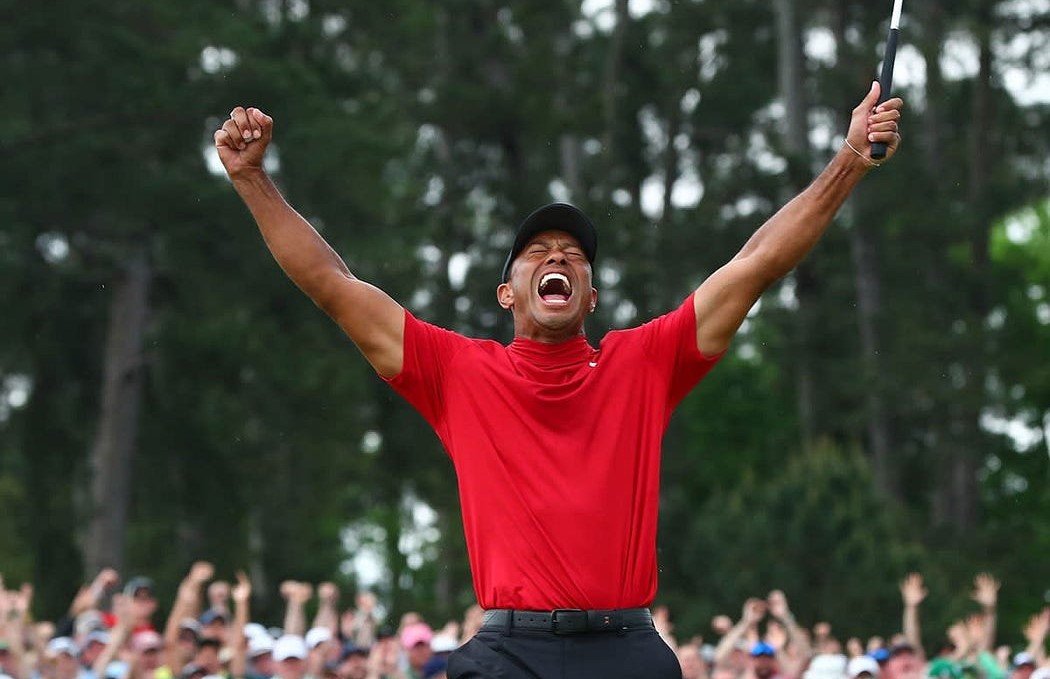
My observations suggest beliefs control our behaviour and determine what we ultimately achieve in life and sport. The careers of Jack Nicklaus and Tiger Woods also support this opinion. Jack won 18 majors and holds more major championships than any other man in history. He came second in Majors 19 times and got into the top five in Major championships 72 times. Tiger has produced a similar record winning 15 times. It is worth noting, that in 2008, Tiger won the US Open with a torn anterior ligament in his right leg, and in 2019 he won the ‘Masters’ after numerous back surgeries that have severely affected his posture, power, and mobility.
When you trace the past of these great golfers, you realise both Jack and Tiger set the prophecy of winning majors from an early age. They also had a support team around them that bought into their beliefs. Jack and Tiger, for example, both had fathers and coaches who believed in their major winning potential. Interestingly when Jack Nicklaus’s father died he stopped winning majors for a number of years. Jack Nicklaus wanted to emulate the history of Bobby Jones; Tiger wanted to match the history of Jack Nicklaus. As a child, Tiger even had the history of Jack Nicklaus’s records written on his bedroom wall. In essence, both Jack Nicklaus and Tiger believed they could win Majors and change the history of their sport. Quantum thinking allowed Tiger to win his first Major at 20.
I never met Jack Grout, Jack Nicklaus’s coach, but I did have the pleasure to meet Tigers coach Butch Harmen. From my experience, I can understand why golfers wanted him to coach them. Butch was one of the most charismatic figures I have ever known. He made everyone around him feel good about themselves and he believed all his players could win majors. Not surprisingly, many of the players he coached did become major winners.
Another coach who believed his players could be major winners was Peter Cowan. Peter introduced me to the Tour in 2002. He told me on many occasions certain players would win Majors. Remarkably, the ones he pointed out, such as Henrick Stenson and Darren Clarke did. In 2010 another one of Peter’s athletes ‘Grahame McDowell, won the US Open at Pebble Beach. The next major winner was Louis Oosthuizen, the next major winner was Charl Schwartzel, and the next US Open winner was Rory McIlroy. Following Rory, the next major winner was Darren Clarke. The interesting thing about this sequence of events was the fact all these players were best of friends, they were all supported by ISN Chubby Chandler’s player’s management company and they were all coached, apart from Rory, by Peter Cowan.
Peter won the BBC Coach of the Year for this achievement. In a private conversation, the players named above told me when Grahame won the US Open, they all began to believe they could win majors. The managers and coaches treated the golfers in a manner that was consistent with this belief. The result of this quantum shift in positive thought was magical and produced this remarkable sequence of events that can only be described as magical or supernatural.
When you work on the PGA tour, and you follow the form of players you will find this pattern of behaviour common. On many occasions, I have seen the friend of a tournament winner win the next event. I remember a good friend and client of mine Paul Broadhurst winning the Portuguese Masters in 2005, the next event, the Italian Open was won by his former Caddy and best friend Steven Webster. Ironically Paul won the Portuguese masters the following year (2006) and Steven won the Portuguese masters in 2007. They achieved these results because of their belief. As Steven Webster explained to me “Paul won last week so I realized I could also win on Tour”. When Paul won back-to-back Portuguese Masters, he explained “I always have a feeling I can win in Portugal.
In another example, another client of mine Stephen Gallacher became the only golfer in history to win the Dubai Desert Classic back-to-back. The year after these two victories he came third. When explaining this amazing feat, he said “I know I can play in Dubai”. This statement shows how beliefs have a huge effect on human performance. The stories I tell here show, that beliefs become reality and quantum thinking may get magical results. Setting goals that are almost impossible to achieve is a form of quantum thinking. In my last example, I would like to highlight a moment in the career of Annika Sorenstam that emphasises this axiom. In 1998 Anika started to work with a team of mental coaches, Lynn Marriot and Pia Nillson. They asked her to make a quantum shift in thought and play to shoot a score of 54. The goal of shooting a score of 54 was part of her mental training program called VISION54. The idea behind VISION 54 was to make Annika believe she could make a birdie on every hole. The proposal that one can shoot 54 for eighteen holes was a positive quantum shift in thought, overriding the belief that par is perfection and that every green requires two putts. Shortly after her mental training, Annika shot a 59 at the Miami Valley Open. This is the lowest score in LPGA history. She went on to win the event and, in that year, she won 7 titles and became the first player in LPGA history to finish a season with a sub-70 scoring average of 69.
Annika’s story emphasizes an important point. Quantum thoughts in the form of beliefs, expectations, and intentions have the power to transform athletes into champions. In essence, if we hold a thought long enough, what we think about our future will manifest.”
